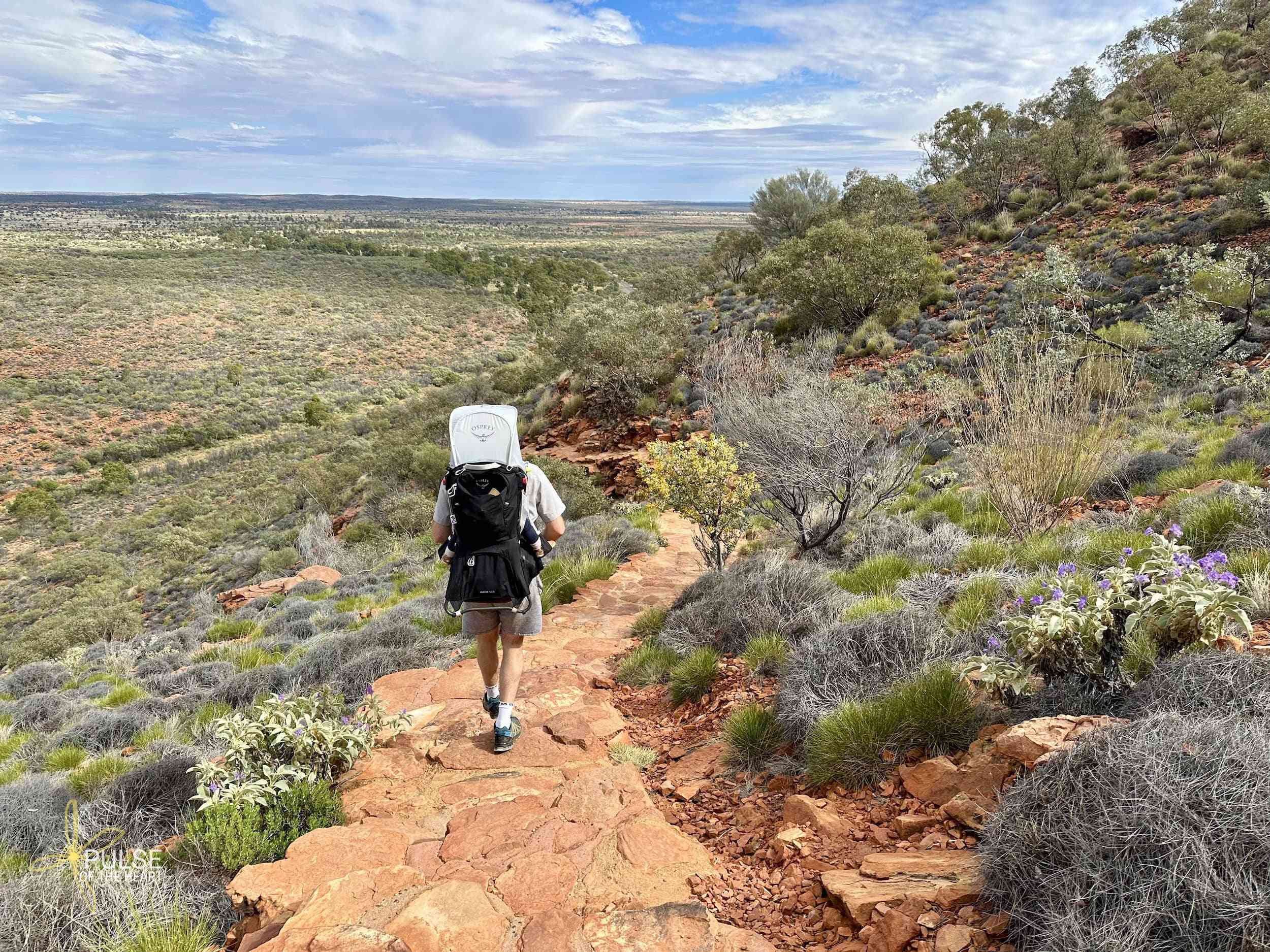
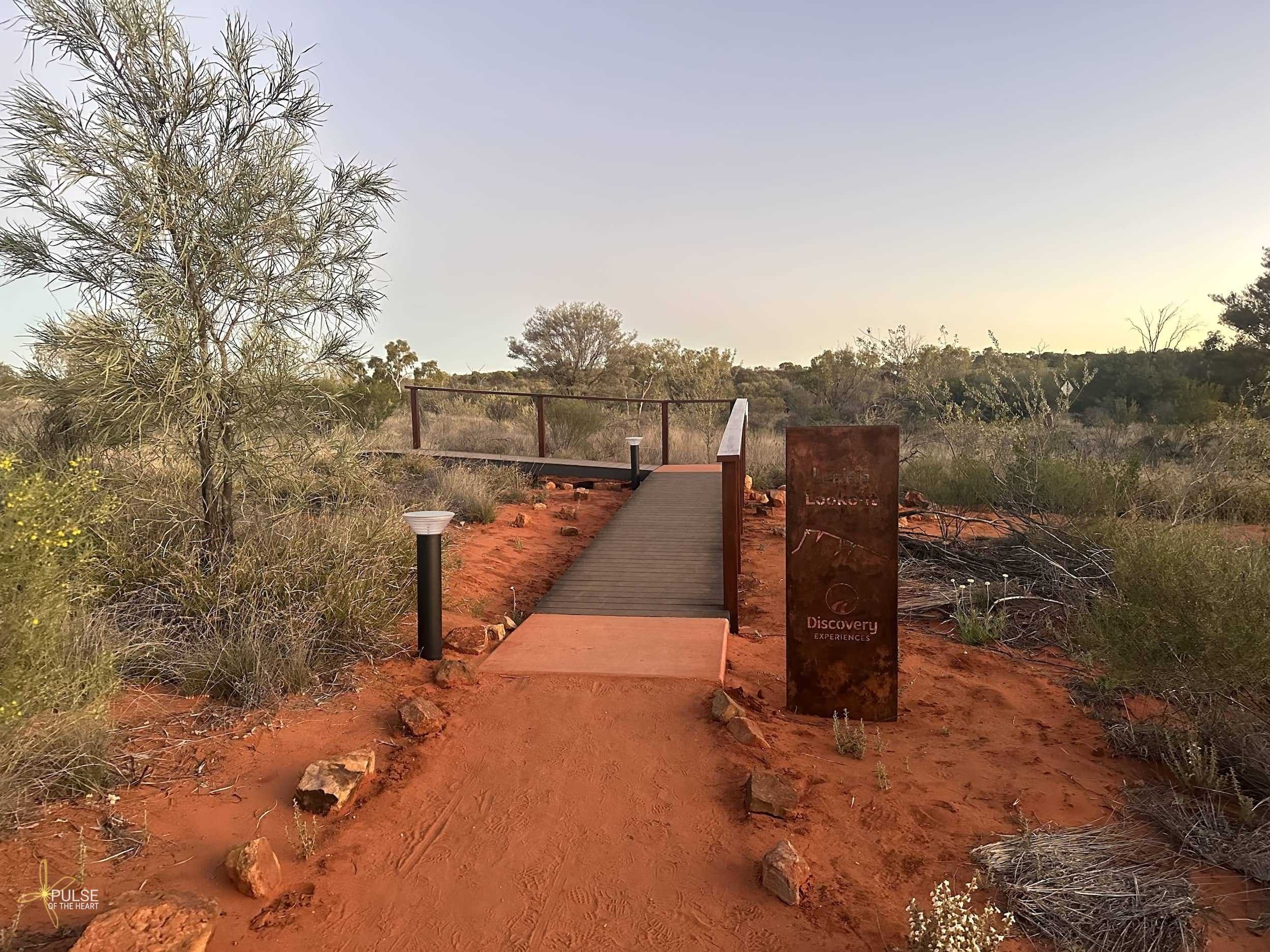
The Oodnadatta Track & The Outback Toddler
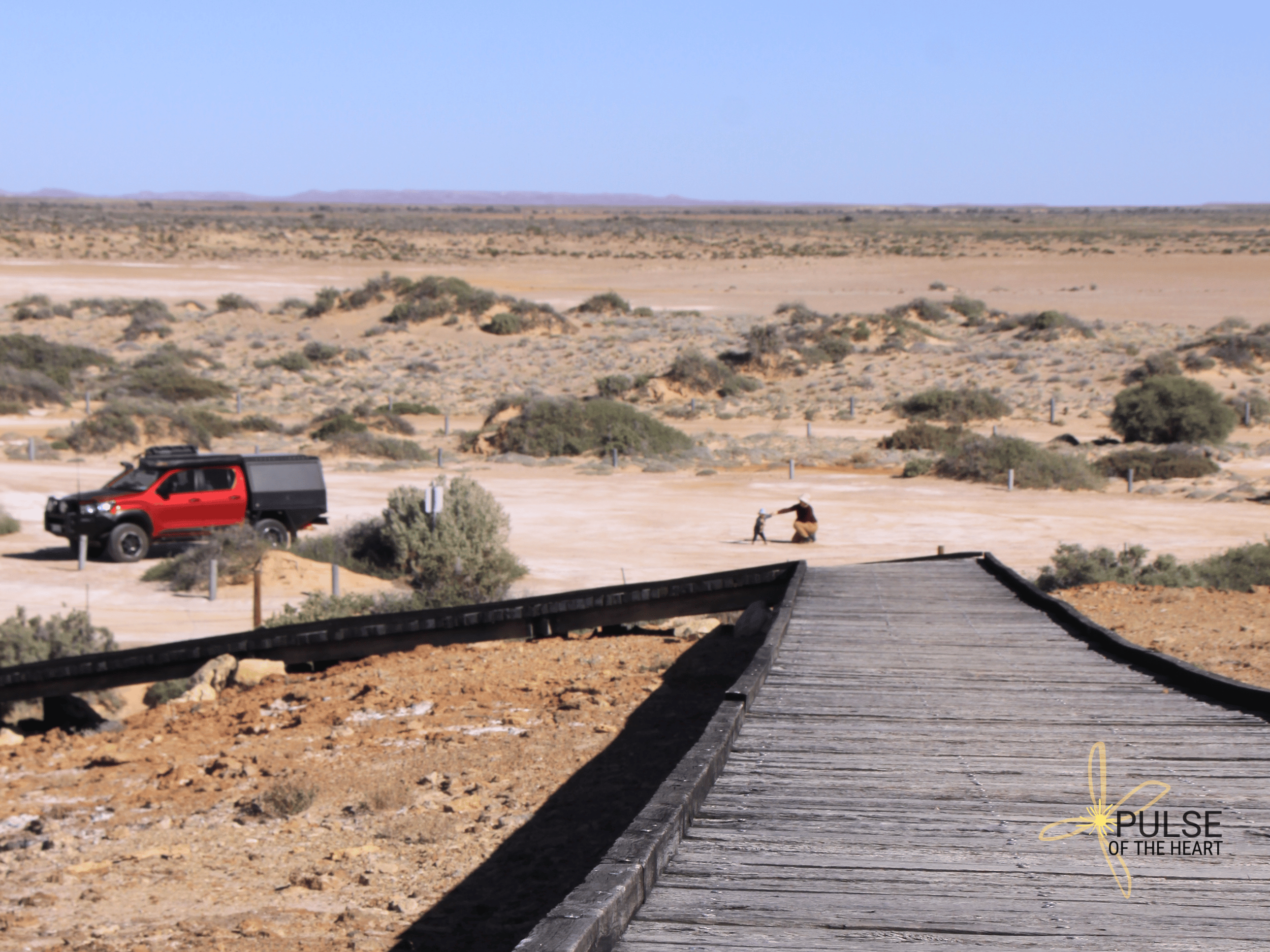
Along the Oodnadatta with a toddler
Touring the 620km Oodnadatta Track is a bucket-list item for plenty of Aussie families. It’s a great introductory 4WD desert track, especially if you travel through peak season. Vast as the outback seems, you’ll see other travellers throughout the day and there’s not too far between services.
Our initial plans for travelling to Uluru, Kings Canyon and the MacDonnell Ranges didn’t necessarily include the Oodnadatta Track but we found ourselves with some free time. And I figure when we’re in an area, we should try to tick off some of the big items! It’s hard to say when we’ll next be heading North/South through the centre, so I’m glad we got to experience the Oodnadatta Track this time around.
I spent a lot of time googling to plan our itinerary. When you travel with a toddler, it’s so. much. slower. We usually try to avoid overnight stops because it’s a lot of time and effort to set up our camper trailer for one night. But the Oodnadatta Track called for a different approach.
From Marree to Marla, there’s a lot of nothing…then a landmark. Then a fairly big stretch of “not a lot”. Oh, and then something to look at! And repeat.
Like many destinations we’ve travelled recently, the Oodnadatta Track isn’t necessarily a “family friendly” destination.
You’ll need to plan accordingly. If your kid is old enough, it’s worth discussing the reality of long travel days. It’s good to hear your child’s expectations of the trip and what you’d both like to get out of the experience.
Be prepared to entertain your child, both in the car and around your camp site as there’s not a lot typically geared towards children.
Here’s the link to our recommended toys for babies, toddlers and preschoolers! (Coming soon!)
Our Oodnadatta Overnights
We travelled north on the Oodnadatta Track from the Flinders Ranges, heading to Uluru and Kata Tjuṯa, Kings Canyon/Watarrka and the MacDonnell Ranges/Tjoritja.
I wrote out a few different options before settling on our list of overnights for this trip. Usually it’s quite obvious, but on a remote trip there’s more to factor in than ‘prettiest campsite’.
Cowards Springs was an easy must-do for us.
Algebuckina Bridge won as ‘most scenic free camp’ along the track.
Then we made our way into Oodnadatta fully intending to spend a day and a night there. And didn’t. Having seen the Pink Roadhouse and taken a quick tour of town, we decided to change up the plans and head for the Painted Desert instead.
We stayed our last night on a new track at the peaceful Arckaringa Station instead.
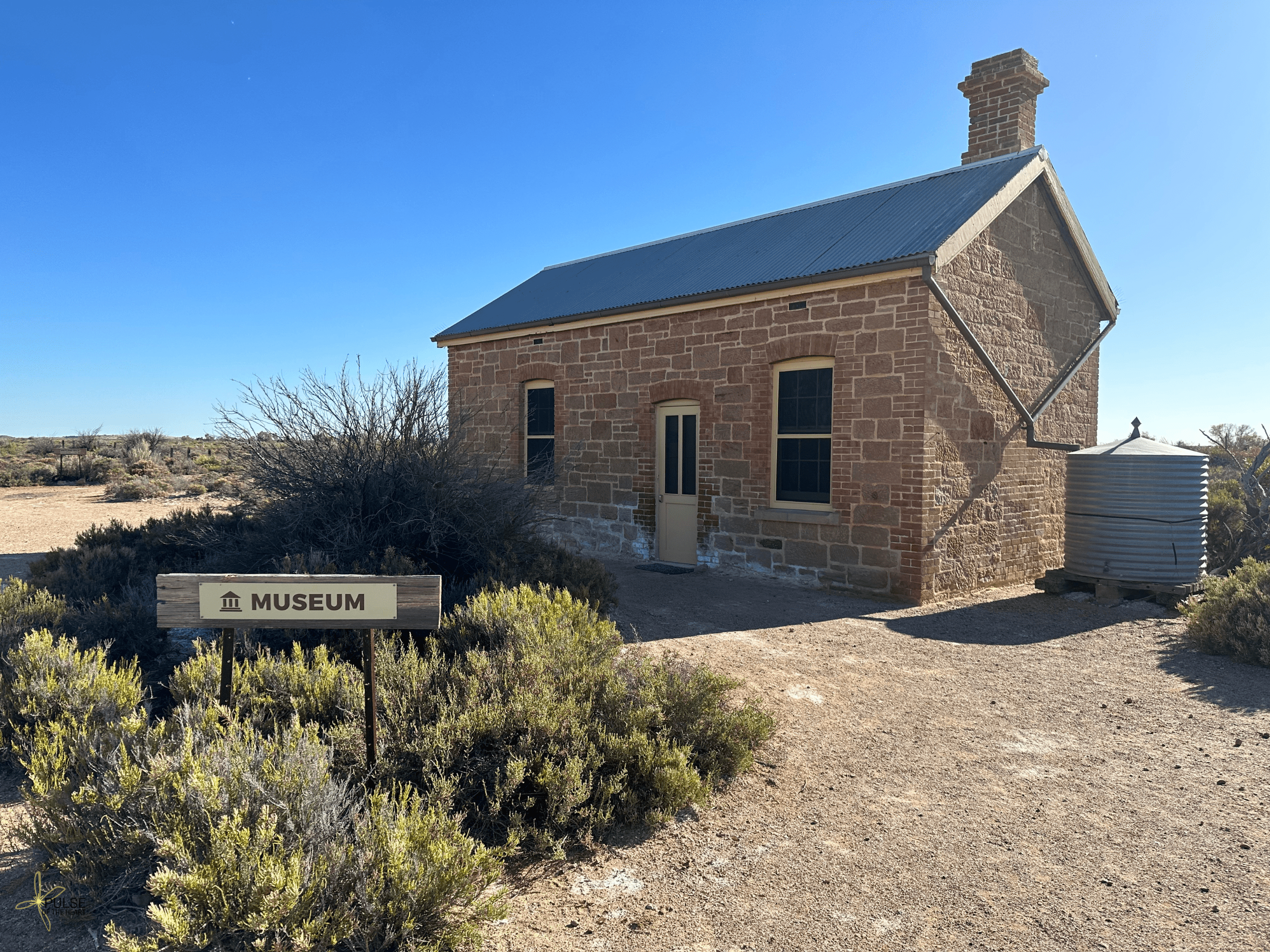
Museum at Coward Springs.
Is the Oodnadatta Track worth it?
Yes, I think so. It’s historic, scenic and a wonderfully accessible way to see the desert - which every Australian traveller should hope to do at least once!
As one of Australia’s most historic tracks, I’ve always meant to do a bit of reading about the Oodnadatta Track. I found myself more motivated to learn a bit about the history with a trip planned.
In case you’re short on time, here’s a super brief intro…
The Oodnadatta Track was mapped by John McDouall Start on a mission for the South Australian government and became the path for the Overland Telegraph Line. It later become the route for the Old Ghan Railway, and remnants of both can be seen at various points along the track.
Of course, our historic tracks and modern highways would not exist without the ancestral knowledge and skills of Aboriginal people. McDouall Stuart’s success (and survival) relied upon Aboriginal knowledge of the desert Country.
For many thousands of years what became known as the Oodnadatta Track, was an interconnected trade route for Aboriginal people. The springs were a critical source of water in an otherwise inhospitable desert and remain of great cultural significance today.
Best time to drive the Oodnadatta Track
The Oodnadatta Track is open all year round, except for road closures after heavy rains.
In summer (Dec - Feb), the temperatures can be extremely hot. It’s generally not advisable to travel the desert in summer.
You’re most like to see wildflowers in bloom during the warmer months from November to April. Spring’s milder temperatures may be a good option if seeing wildflowers is important to you.
Winter (June - Aug) is popular with travellers heading north for the dry season. The weather is still mild during the day, although the nights can get cold. You’re more likely to encounter road closures due to heavy rainfall.
Road conditions on the Oodnadatta Track
The best place for road condition information is from Outback Road Report online from the South Australian government. It provides the most up-to-date information and so is the best resource for warnings, restrictions and road closures - assuming you have internet access!
We spent about time in the Flinders Ranges before heading north, so we had a couple months of checking weather reports and refreshing the road conditions page daily. Road conditions reports are frequently displayed in the mornings at tourist information centres, including at roadhouses, campsites and private accomodation.
I will say the SA Outback Roads report is very frequently updated. We’ve seen 2-3 updates given in a day after a rain event when crews were out physically checking roads.
Local advice is great, especially if there’s rain predicted or a road has recently reopened.
Other travellers can be a sound source of info, but we’ve found “rough going” to mean vastly different things to different people. We’ve definitely had the experience of travelling along a road and wondering if we missed a “closed” sign somewhere. And also of wondering what all the fuss was about after hearing multiple stories of bumpy rides and damaged trailers. And if a grader’s been down the road, you’ll have a vastly different experience from people who travelled the same stretch of track only hours before.
Along the Oodnadatta Track
Marree
Marree is on Dieri Country.
Marree sits at the junction of the Oodnadatta and Birdsville Track. There’s plenty of history in the former railway town. See the memorabilia from the Tom Kruse, the outback mailman at the Marree Hotel. Check out the railway museum and a model of the first mosque in Australia built by the Afghani cameleers, or have a look around the Lake Eyre Sailing Club.
Accomodation and Amenities
Visitors to Marree can stay at the Marree Hotel, by booking a room or camping for free at the back of the pub. Alternatively, find accomodation at Marree Oasis Caravan Park and Motel.
You’ll also find a general store, post office, fuel, and meals available at the Marree Hotel and the Marree Roadhouse.
Marree has a small playground, which was a nice surprise. There’s limited shade, so visiting earlier in the morning would be best. It would be a good option for a play after spending the night in Marree and heading off for a big day of driving.
Being a little over 650km from Adelaide, Marree is a very common stop before heading onto the Oodnadatta track. Having spent the night at Farina (after enjoying the underground bakery), our first camp would be on the Oodnadatta Track proper, at Cowards Springs.
Coward Springs
Coward Springs is on Arabana Country.
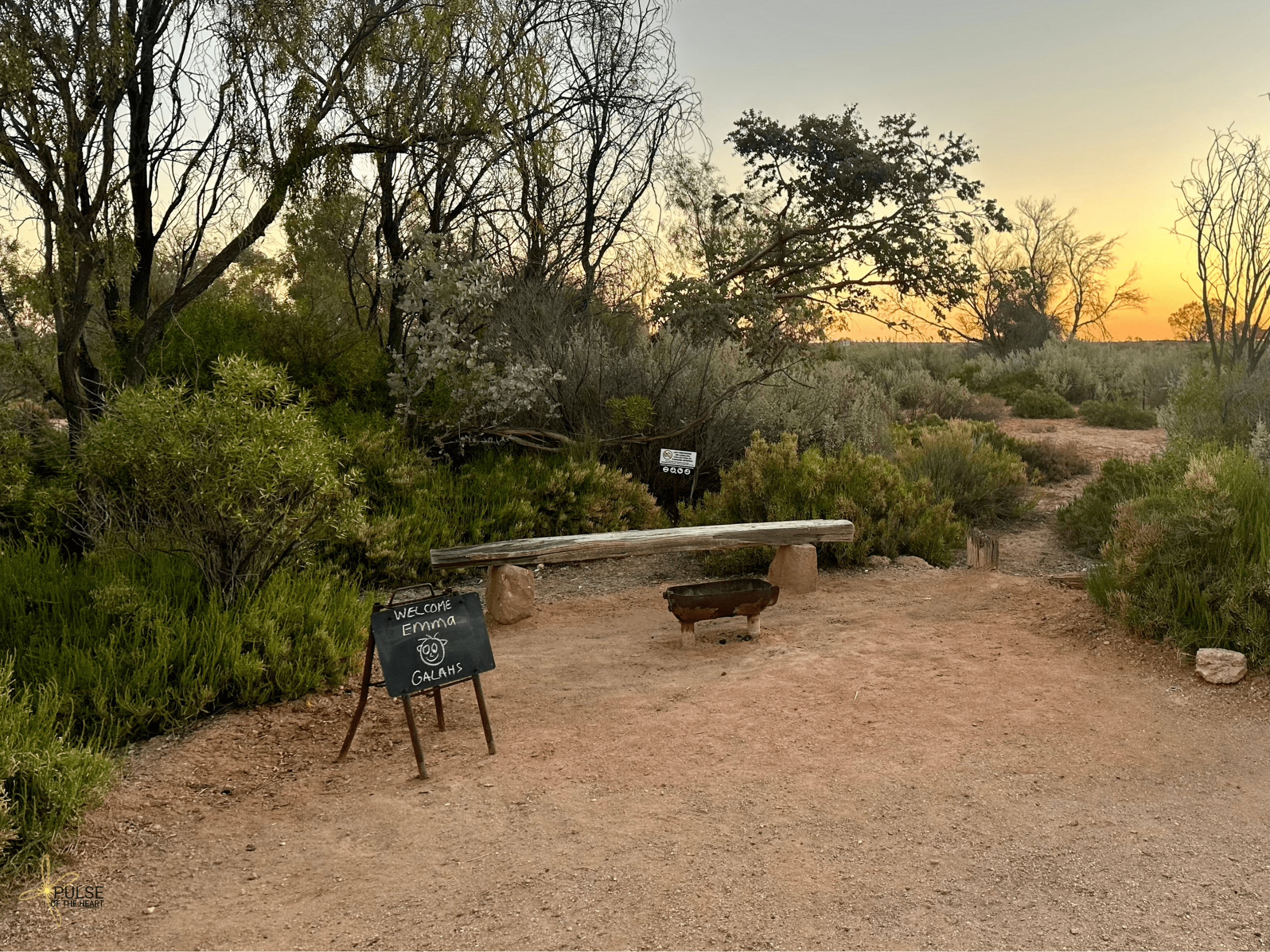
We enjoyed our stay at Coward Springs. There’s a good variety of campsites of all different sizes, including some suited to larger group bookings.
The campsite was fully booked our first night, including a few extras camped in the carpark in ‘overflow’ sites. Initially, I was a bit concerned as the overflow section was serviced by the same toilet block and we weren't far away. However there were no issues.
If you’re particular about your camp experience (e.g. you’ve got a special event, group booking) I’m sure you could give Scott and Barb a ring and they’d be great with advice.
I’d definitely suggest making a booking. The campground was fully booked on the day we arrived. A few cars turned up the same time as us, around mid-afternoon and fit into the overflow. Several groups of 2-3 cars were turned away.
Cafe
The cafe at Coward Springs campground feels like such a luxury. It’s a lovely spot to sit, although it does have busy times because it’s also where you’ll be checking in. We enjoyed a peaceful morning coffee and delicious date scones on our second day.
Natural Spa
The natural spa at Cowards Springs is a wonderful luxury after a day of travelling. It’s fed by a bore, originally sunk in 1887 and the water source for Coward Springs permanent wetland.
It’s a small pool, the ideal size for couples or small families. Of course, you could always cosy up see how many people you’ll fit in! Because of the size, I think most people would follow the unspoken rule - don’t crash in on others if they’re enjoying the water.
The campsite full the first day of our stay and we still had a turn at the spa. We stayed about 15-20 minutes (which was plenty of time for us) and left when the next family turned up. Best to keep it short and sweet so everyone gets a turn.
Museum
Only two buildings from the Old Ghan railway days remain at Cowards Springs now, the Station Masters House and the Engine Drivers Cabin. The Station Masters House has been restored as a private residence while the Engine Drivers Cabin has become a small museum.
The musem is free to enter and is worth a quick look around for the old pictures and books. The website suggest you could spend hours there, and perhaps you could if you’re going to read every book cover to cover. However, there’s about 5-minutes worth of looking at pictures if you’ve got a young child with you!
Wetlands Walk
The wetlands walk was a drawcard when I booked our stay! But…we didn’t attempt the walk. It’s only 250 metres, but I’ve never seen as many mosquitos as we did at Coward Springs. No amount of insect repellant was going to be enough for me to risk it!
Booking a campsite
We paid $30 a night for our site in July 2023. Bookings are made through the website. You’ll need to fill out an enquiry form and then Scott or Barb will be in touch via email to confirm.
Make an enquiry for your Cowards Springs Camping Ground stay here.

Wabma Kadarbu / Mound Springs Conservation Park
Wabma Kadarbu Mound Springs Conservation Park is on Arabana Country
A must-see along the Oodnadatta Track, the Wabma Kadarbu Mound Springs Conservation Park is the best place to see active mound springs.
The mound springs were the essential water source for the Oodnadatta Track, both during construction and for the repeater station settlements along the line. The springs remain central to the lives of the Arbana people and Wabma Kadarbu Mound Springs Conservation is a sacred site.
You’ll need a 4WD to access the conservation park. I don’t recommend towing due to the poor road conditions. The creek crossing is particularly rough but manageable if you take it slowly. That said, it’s definitely worth making the effort to drive in!
There’s signage to learn more about the main artesian springs in the park, Blanche Cup and The Bubbler and a boardwalk around each to protect the fragile environment.
Park Entry Fees
The Wabma Kadarby Mound Springs Conversation park has a park entry fee of $13.00 per vehicle. Pay online at the National Parks and Wildlife Service South Australia website.

Kati Thanda–Lake Eyre
Kati Thanda - Lake Eyre is on Arabana Country.
Kati Thanda - Lake Eyre is one of Australia’s largest inland lakes and one of the largest salt lakes in the world. At over 9500 square kilometres, it’s difficult to appreciate from the ground and there’s not a lot to see from the pull-in off the Oodnadatta Track.
The best way to see the lake is definitely by air. You can take a scenic flight from William Creek to fully appreciate just how vast it is. We took a scenic flight over Lake Frome from Arkaroola and it was well worth it. I imagine Lake Eyre would be a spectacular flight too.
Kati Thanda - Lake Eyre National Park access is 4WD only. It’s is generally recommended only for experienced drivers who are travelling in a group and carrying appropriate recovery gear, fuel, water and other supplies.
Check the latest Desert Parks report and Outback Roads Report before setting off. Access roads are closed during the summer season, from December to March (dates can vary).
Kati Thanda - Lake Eyre is a sacred site and the Arabana people ask that visitors respect the lake’s cultural significance by avoiding driving or walking on the fragile lakebed.

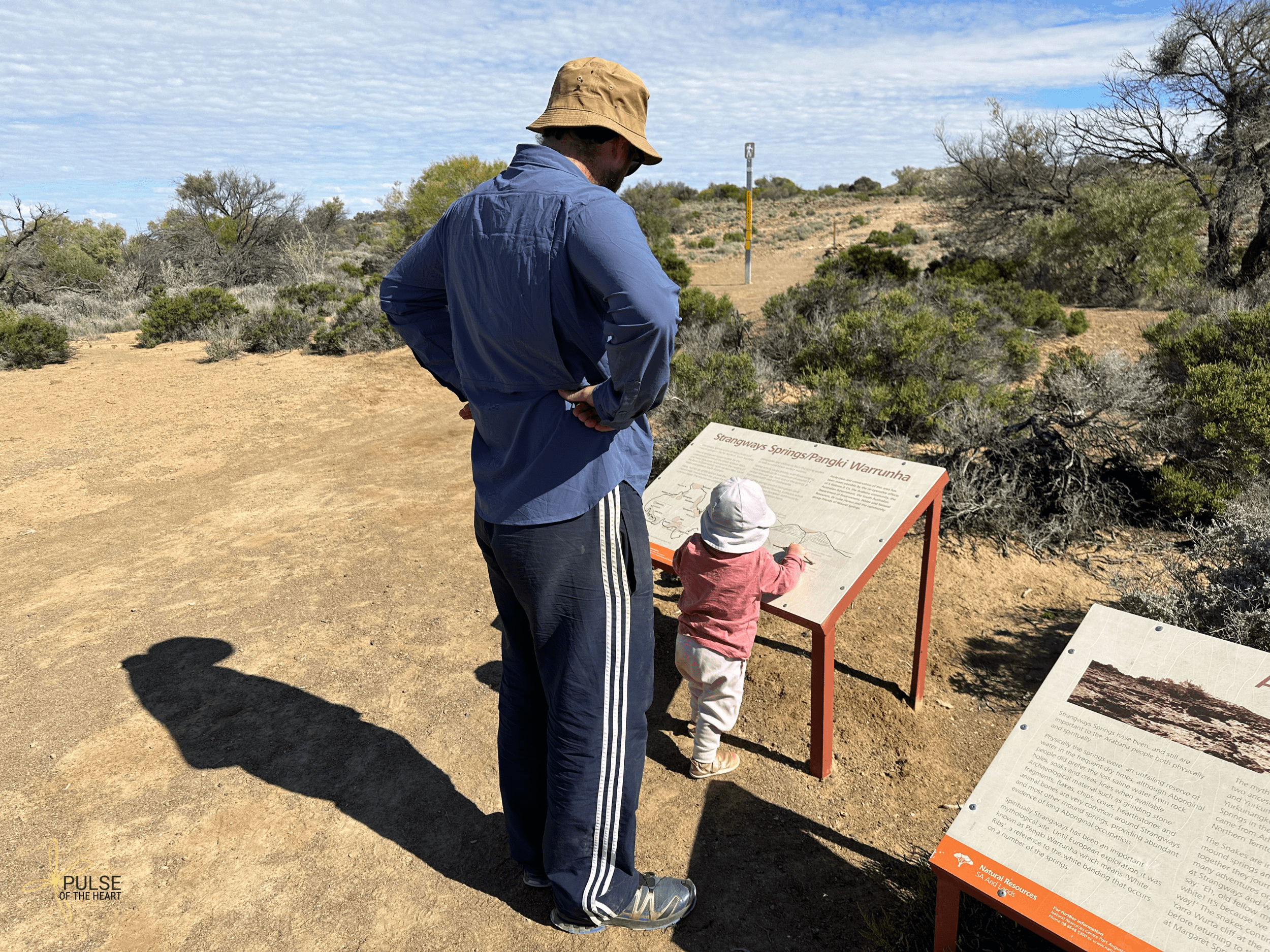
Strangways Historic Site / Pangki Warrunha
Strangways Historic Site is on Arabana Country.
Strangways Historic Site is a significant place to the Arabana people, known as Pangki Warrunha and a place of deep spiritual significance.
Stangways Historic Site is another cluster of mound springs. These springs are no longer flowing, due mostly to artesian bores. They were once a permanent source of fresh water in the arid environment and for many thousands of years, the mound springs were central to the lives and culture of the Arabana people.
The Arabana people say the springs were created by two ancestral snakes, Kurkari (Green Snake) and Yurkunangku (Red-Bellied Black Snake). The creation story extends from the Northern Territory into South Australia. The name Pangki Warrunha means “white ribs”, from the white banding around many of the springs. It’s said that Kurkari and Yurkunangku camped overnight at Pangki Warrunha, waking in the morning to notice their ribs have turned white after travelling such long distances.
Strangways became the site of one of many repeater stations along the Overland Telegraph Line. Later, the settlement grew during the construction of the Great Northern Railway (The Ghan). In October 1896, its post and telegraph services were closed and relocated to railway town, William Creek.
Strangways is an interesting stop along the way, with plenty of signage to read and learn about the area. Visitors should tread carefully as they explore the ruins and the fragile mound springs environment.
William Creek
William Creek is on Arabana Country.
William Creek is Australia’s tiniest town, surrounded by the world’s largest cattle station, Anna Creek Station. It’s a popular destination for the William Creek Hotel, which claims Australia’s most remote pub and as a base for scenic flights over Lake Eyre, the Painted Hills and Dalhousie Springs.
William Creek Hotel serves meals and offers accommodation with rooms, cabins or camping facilities. Fuel is available 24/7 from the hotel.
Peake Telegraph Station Historic Site
Peake Telegraph Station Historic Site is on Arabana Country.
To visit the ruins, you’ll need to travel off the Oodnadatta Track and head about 14 kilometres down a Public Access Road. High clearance 4WD recommended, as the road conditions vary and tend towards being quite rough. Towing is not recommended so you’ll need to leave vans and trailers at the beginning of the track.
Signage has been provided for a walk around the settlement ruins to learn more about the history of the Peake repeater station and the copper mine in the nearby area.
You could also explore the Creek and Cemetery Walk or the Cooper Top Smelter and Mine Walk to learn more about the area. Allow 1-2 hours for each walk, following the numbered posts. You’ll find the walk brochures here (LINK) on the Friends of the Mound Springs website.
Peake Telegraph Station was built close to Freeling Springs. These mound springs are known to the Arabana people as Yardiya Parnda and Yardiya Kupa, meaning big and little spindle. Like at Strangways, the mound springs are a sacred site for the Arabana people and are also part of dreaming story of the ancestral snakes, Kurkari (Green Snake) and Yurkunangku (Red-Bellied Black Snake).
Although the mound springs flows are much reduced, they still support a small but unique wetland environment, with some species of native fish and insects that only live in the Freeling Springs area.
Algebuckina Bridge
Alegbuckina Bridge is on Arabana Country.
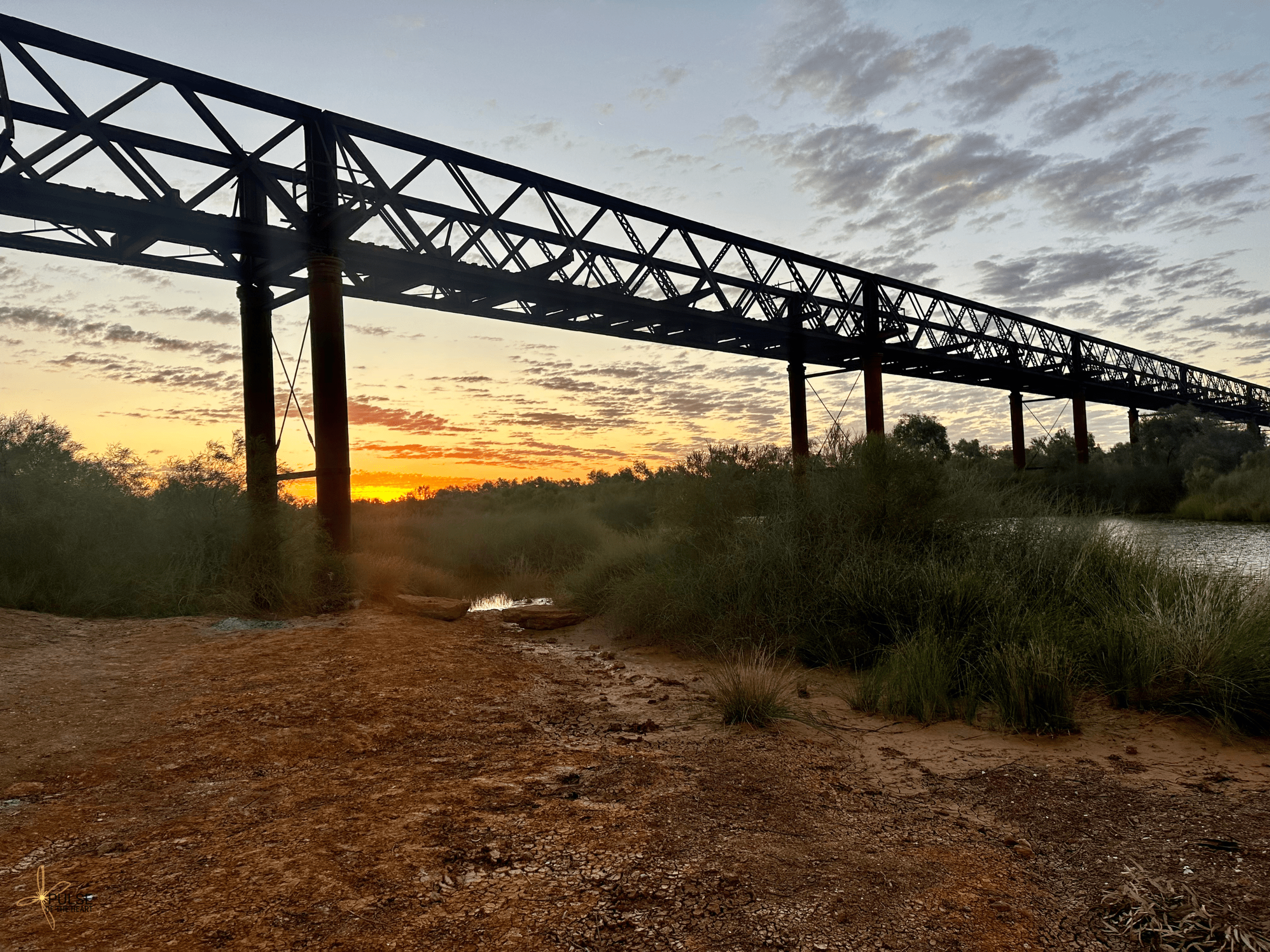
Algebuckina Bridge was a planned overnight stop on our Oodnadatta Track trip, having seen plenty of spectacular photos of the bridge - and who can say no to a picturesque free camp?
The old railway bridge was opened in 1892, crossing the floodplains of the Neale River. It’s the longest bridge on the Old Ghan Railway line and was an incredible engineering achievement at the time.
Oodnadatta
Oodnadatta is on Arabana Country.
It’s definitely something to see the iconic Pink Roadhouse - often described as an oasis in the desert. It was busy - full of other travellers and a great atmosphere. The roadhouse has a well-stocked shop, hot meals and plenty of pink souvenirs for every taste imaginable.
The roadhouse has a variety of accommodation options and there’s a free camp within Oodnadatta too.
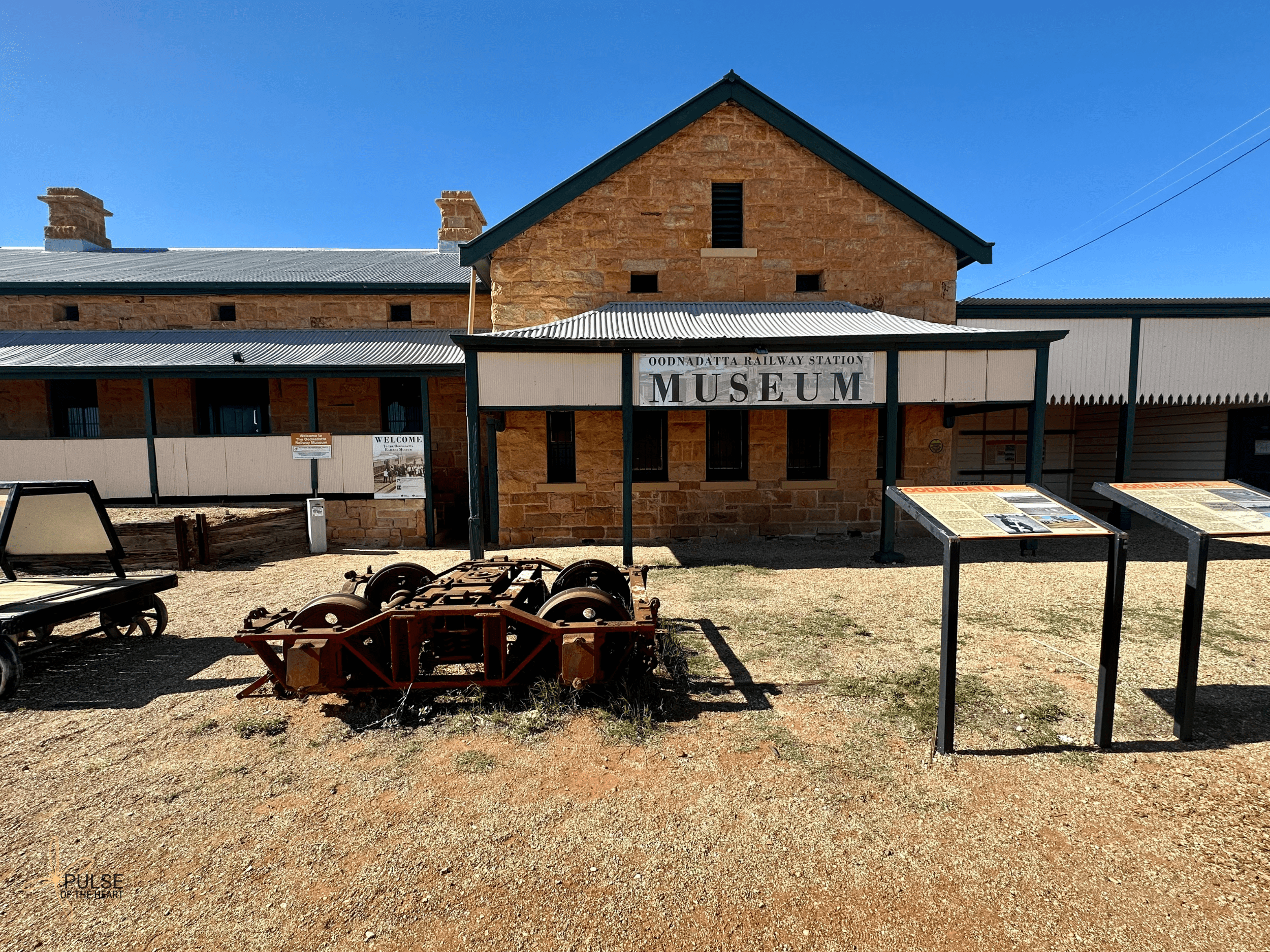
Whilst in Oodnadatta, check out the Railway Heritage Museum. It has a great photo collection and a nice amount of information. It’s best suited to adults, without much to interest most children. We chose to split up, sending one parent to the playground with Sprout (the toddler) whilst the other got to enjoy a more leisurely look around.
The partially-shaded playground has plenty of equipment, including a toddler-sized climbing frame and slide.
Oodnadatta is rich in heritage and history and it felt a little surreal to be in the town I’d been learning about in books, reading stories that stretched along different points in Oodnadatta’s history.
Marla
Marla is on Yankunytjatjara/Antakirinja Country.
Marla is a tiny service town with a large roadhouse and little else to look at. The town was established in 1981 as an administration centre for the region and to serve travellers along the Stuart Highway.
There’s 24hr fuel, a reasonably stocked store, take away food and accommodation options including motel rooms, cabins and camp sites. I wouldn't plan for a stop at Marla, unless you’re needing to use the ammenities.
It’s around 200km from Oodnadatta to Marla, and takes around 4 hours (depending on road conditions).
Taking a detour
We initially planned to spend the night at Oodnadatta, but after checking out the sights in town early we decided to move on. We picked up a brochure of the stunning Painted Desert at the Pink Roadhouse and decided to detour towards the Arckaringa Hills instead.
This route to the Stuart Highway actually ends up being a little shorter and considerably more scenic than continuing on the Oodnadatta Track towards Marla. You can generally drive from Oodnadatta via the Painted Desert out to the Stuart Highway in 2.5 - 3 hours (depending on road conditions).

The Painted Desert
Painted Hills Lookout / Mt Batterby Lookout
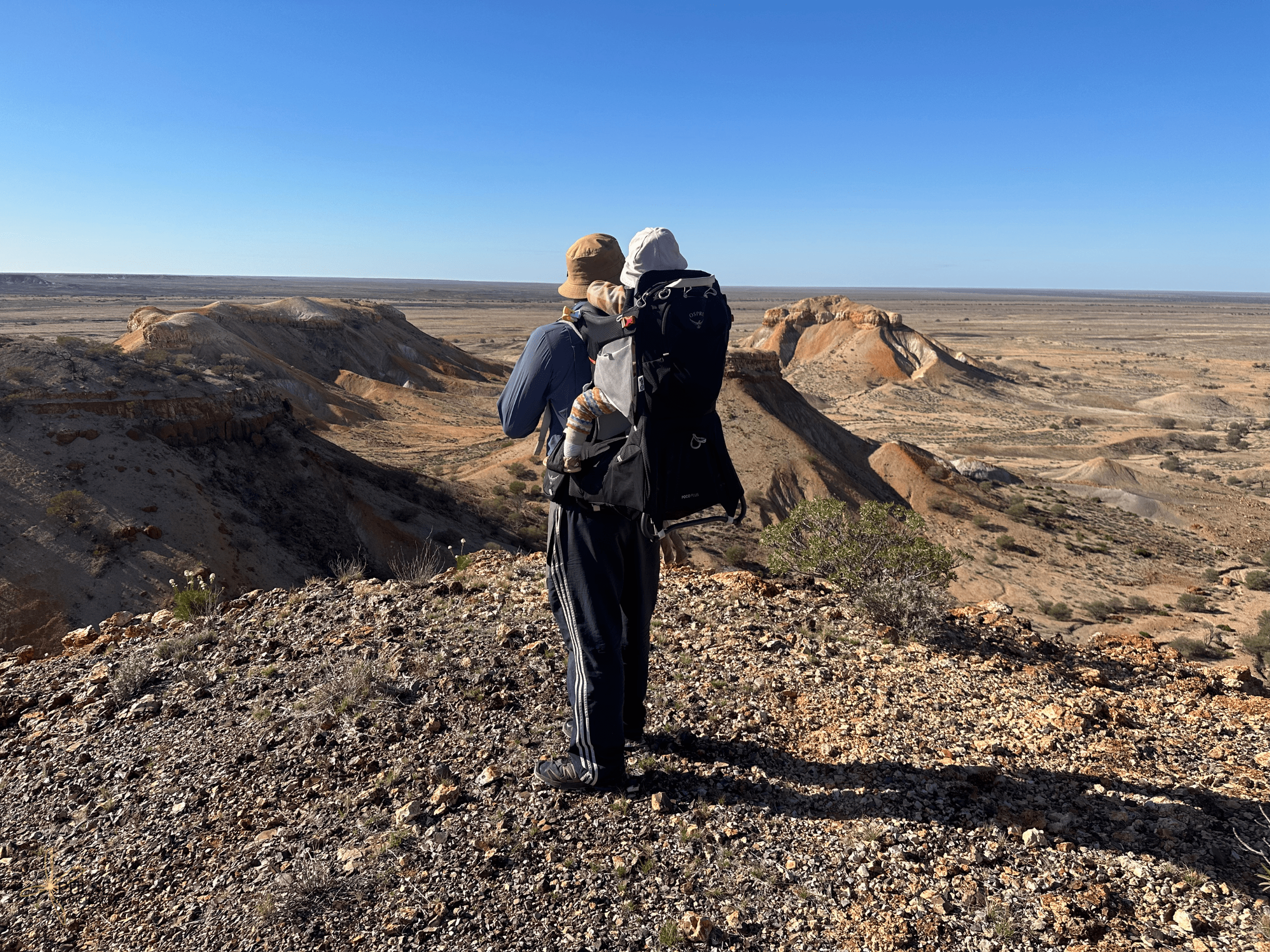
This stunning lookout is an absolute must-see. Drive most of the way up, with space to turn around. Hop out and walk to the top of the lookout for brilliant view.
Hilltop Walking Trail
The Hilltop Walking Trail is definitely worth a look to get closer to the beautiful Painted Desert hills. The walk should be about 1km however with limited trail markers and multiple off-shoots, it’s easy to end up off track.
It would be a beautiful spot to watch the sunset. We walked the trail in early morning before heading off from camp.
There were literal clouds of mosquitoes when we visited in July so I definitely recommend wearing tropical strength repellent and long, loose clothing. The track is loose gravel and can be slippery in spots. There are no facilities.
Arckaringa Station Homestead
Camping is not permitted in the Painted Desert, however Arckaringa Homestead provides a peaceful place to camp nearby. No bookings required, with an honesty box for payment ($20 per vehicle as of July 2025).
The campground has a communal fire pit (no individual campfires permitted) and a shared picnic area with shelter. Two unisex bathrooms with showers, sink and mirrors and flush toilets.
Arckaringa Homestead also has basic rooms available - these need to be booked in advance.
Staying a night gives you the opportunity to enjoy a desert sunset, take in the starry outback skies and rise early to see a stunning sunrise over the Painted Desert. If you’ve got an extra night to spare, it’s well worth it.
We stopped at Painted Hills Lookout / Mt Battersby Lookout on the way to Arckaringa Homestead. Set up camp and found a spot to enjoy the sunset. The next morning, we packed up early but left the camper trailer parked at the camp whilst we explored the Hilltop Walking Trail.
Continuing on from the Oodnadatta Track
After exploring the Painted Desert, we headed on from Arckaringa Homestead out to the Stuart Highway. It’s about a 70km drive and may take about an hour and half (depending on road conditions).
We continued northwards towards our next major destinations, Uluru and Kings Canyon/Watarrka!
Check out these blogs next: