Visiting Mungo National Park with a toddler
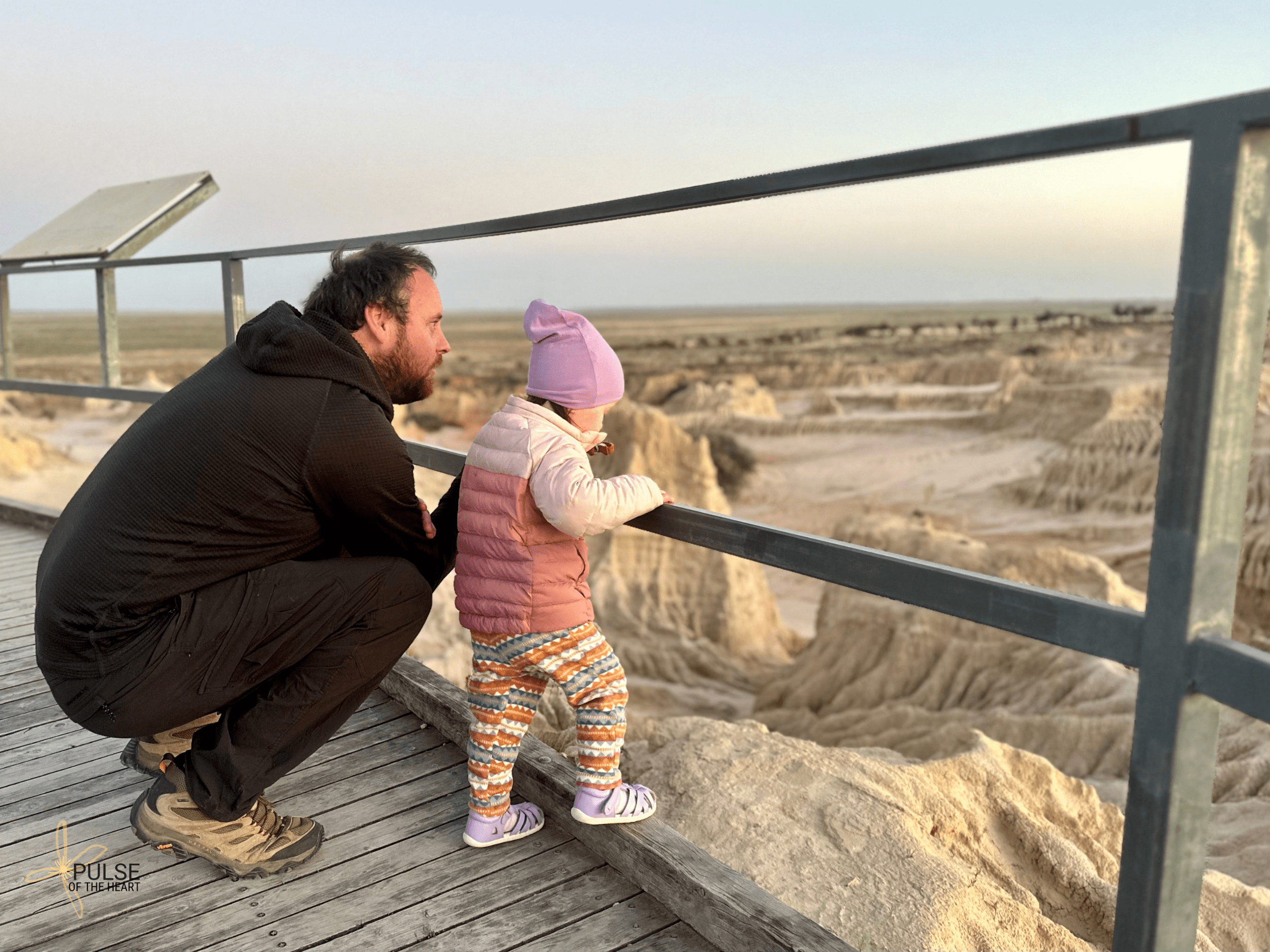
Willandra Lakes/Mungo National Park is on Paakantji, Mutthi Mutthi and Ngiyampaa Country.
Visiting Mungo National Park with a toddler
Our family really enjoyed our trip to Mungo National Park - I’d been before (10 years ago now!) so knew a little of what to expect. Since that first trip, I’ve been wanting to get back. Some places just stick with you - and Mungo is one of those places for me.
Lake Mungo is a deeply spiritual place and a sacred site for Aboriginal people. A guided tour is a must to fully appreciate Mungo National Park. I’ve written more below about our experience on tour with Sprout, who was 20 months at the time.
The visitor information centre is packed with information - but it’s aimed at an adult audience. Be prepared to split up if you really want to take it all in. Someone can wander and read in peace whilst the other dishes out snacks at the shaded picnic tables. Swap and let your kid run around - see if they can match their footsteps to children who played nearby 20, 000 years ago!
We stayed at Main Camp, two kilometres from the visitor information centre. The campsites are spacious and peaceful. There’s not much more than dirt and sticks to play with, so plan to head off on family walks or bring some games and toys to keep littles ones entertained around camp.
The nearest town is Mildura - 1.5 hours drive on a rough, dirt road. So before travelling with a little kid, make sure you’ve stocked up on nappies, preferred foods and any children’s medicine you might need. Nothing worse than realising you’re missing something important and having to take the long road back out!
Only limited Telstra coverage is available in the Mungo National Park area. In an emergency, contact park rangers using UHF Channel 3. Downloading an app like Emergency Plus is recommended before travelling remotely.
No food, fuel or firewood is available at Mungo National Park - you’ll need to carry in (and out!) everything for your trip.

About Mungo National Park
Mungo National Park sits within the World Heritage Area of Willandra Lakes. The area is protected for its outstanding natural and cultural value. Rich in Aboriginal history, the Willandra Lakes Region remains of great importance to the Paakantji, Mutthi Mutthi and Ngiyampaa people today.
As the winds blow across the ancient lake beds, the sands shift to reveal further artefacts and more evidence of an ancient way of life. The area also contains an important geological record of climate, environment and the reversal of the Earth’s magnetic field.
Along with its deep cultural significance and natural value, Mungo National Park is stunningly scenic.
Mungo Lady and Mungo Man
Mungo Lady and Mungo Man lived around Lake Mungo about 42 000 years ago. Mungo Lady is the oldest known human to be cremated and Mungo Man is the oldest human to be found in Australia.
The discovery of their remains provided scientific evidence of ancient human occupation of Australia - something Aboriginal people had already demonstrated through their oral histories.
With further evidence from other sites around Australia, it’s accepted that Aboriginal people have lived in Australia for at least 65,000 years, and have the oldest continuous living culture in the world.
The remains of Mungo Lady and Mungo Man were removed without permission from Aboriginal people and held for many years at the Australian National University. Mungo Lady and Mungo Man have been returned to Country and reburied in the Willandra Lakes Region and the site of their reburials has been kept secret.
Other ancestral remains and relics remain at Mungo Visitor centre, stored securely whilst waiting for government approval to be reburied. This understandably remains a source of great sorrow for Aboriginal people.
Things to do at Mungo National Park
Plan to spend at least a couple of days at Mungo National Park. I highly recommend checking out the visitor information centre, booking a guided tour and spending the night so you can get up early and see the specular landscape at sunrise. There’s also several self-guided walking trails, peaceful bush camping and the Mungo Track.
The best time to visit Mungo National Park is during the spring and autumn, when the weather is milder. The temperatures can be extremely hot in summer, whilst winter rains can lead to road closures.
Mungo Visitor Cente and The Meeting Place
The visitor centre is the best place to start your Mungo National Park adventure. If you’re camping, this is also where you’ll register and pay camp fees. There’s also has toilet and shower facilities, water taps and gas barbecues.
Inside the centre, you’ll find plenty of information about Mungo’s history and what makes the landscape so special. It’s fairly safe for kids to roam - however curious toddlers and little kids will need supervised around some of the displays.
When there’s a lot of information to take in, Jacob and I will often split up and one adult will take Sprout outside for a play. It’s a good chance to head out to The Meeting Place and see the replica of 20,000 year old footprints. There’s enough space for kids to run around and some shaded picnic tables if it’s time for a snack.
The visitor information centre is un-manned at weekends. You’ll be able to pay fees, use the amenities and wander through but there are no rangers there.
Mungo Woolshed
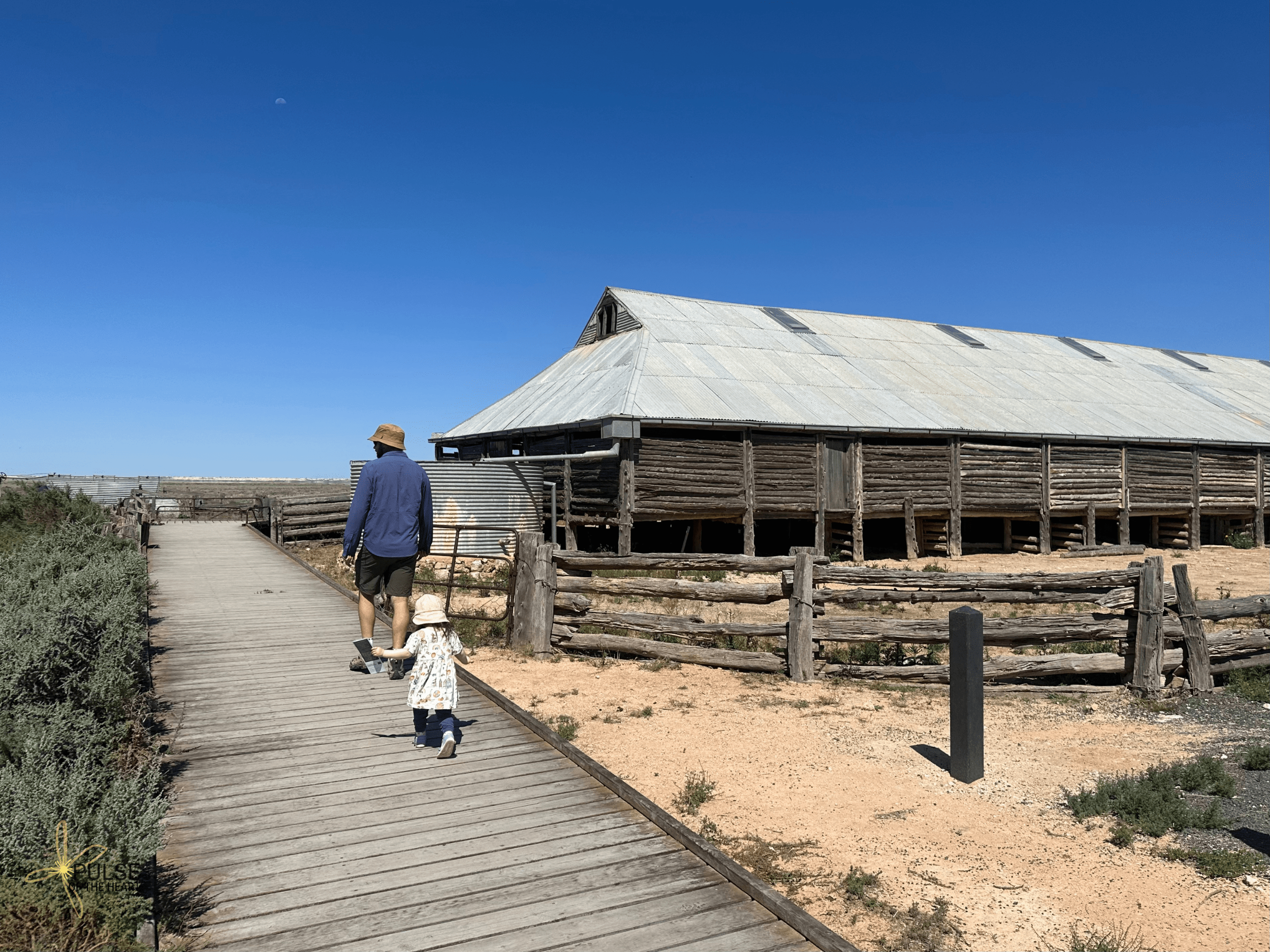
After looking around the visitor centre, take a short walk to the Mungo Woolshed. It was constructed in 1869 from locally harvested cypress pine on the historic Gol Gol Station.
Pastoralism is another important part of understanding the history of Mungo National Park. Many information signs throughout the park weave the stories of European settlers with Aboriginal perspectives.
Guided tours at Mungo National Park
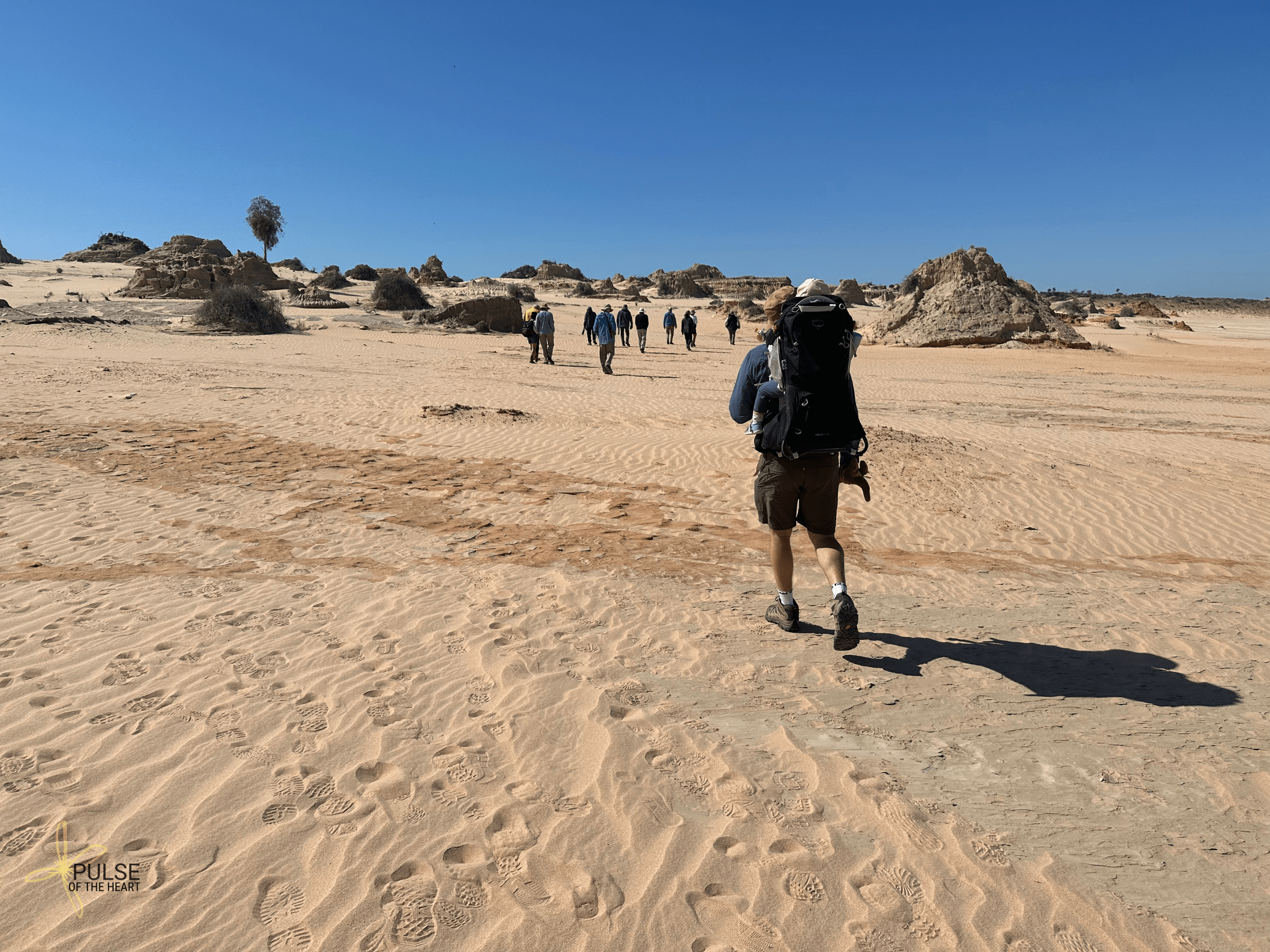
I highly recommend booking a tour if you’re travelling to Mungo National Park. Access to the fragile lunette landscape is restricted to those on tour and it’s nearly impossible to appreciate from the boardwalk alone. As well as getting to walk amongst the dunes, you’ll gain the perspective of a highly knowledgeable guide.
NPWS tours are led by Aboriginal guides, sharing over 40, 000 years of history in a place of immense cultural significance. You’ll meet at the Visitor Information Centre, be welcomed to Country and then follow your guide in your own vehicle to the Walls of China (Mungo Lunette) carpark to start your tour.
Expect to spend 2 hours on tour, with an easy 2.5km walk at the Mungo Lunette. The terrain is mostly sandy and sloped and isn’t suitable for prams or wheelchairs.
We booked our tour through the NSW National Parks and Wildlife Service website. You can find the link to book here.
Tours run on most days - you’ll see the available dates when you book.
TOUR PRICES:
Adult - $50.00
Concession - $35.00
Child (5 - 16yo) - $35.00
Child under 5yo - Free
Prices current from August 2025.

Mungo Track
Mungo Track is a 70km loop drive starting from Mungo Visitor Information Centre. 4WD is not required, although the track may be closed in wet weather. The track is also suitable for mountain bikes.
Mungo Track travels in an anticlockwise direction towards the Walls of China. If you’re not booked onto a tour, take the boardwalk to view the lunette. You’ll also pass Red Top Lookout, Belah Camp and Zanci Homestead.
If you’ve got the time and will enjoy a driving day, add Mungo Track to your itinerary. Otherwise, it’s worth a drive out to Zanci Homestead (track is two-ways at Zanci Homestead) without doing the rest of the loop track.
Also check out Mungo Lookout, especially at sunrise or sunset as the colours and shadows transform the landscape into something really spectacular.
Walks at Mungo National Park
There are a number of walks at Mungo national park, most are short and easy walks to viewpoints. Mungo Lookout, Walls of China and Red Top Lookout (especially at sunset) are highlights.
There’s also the 10km Zanci Pastoral Heritage Loop if you’re looking for a longer hike. Allow 3-5 hours to complete. Be sure to take plenty of water and sun protection as shade is very limited.
Mungo Lodge
On the doorstep of Mungo National Park, Mungo Lodge offers accomodation and dining options.
The cafe is open throughout the day. Dining times for breakfast, lunch and dinner can be found on the Mungo Lodge website. We stopped in for a coffee and it was welcome afternoon treat.
Accommodation options include cabins, bunkhouses, glamping tents and unpowered camp sites.

Our experience touring with a toddler
Our guide Tanya, a Muthi Muthi woman, was highly knowledgeable, experienced and passionate. It was a privilege to walk with her on Country. The tour was very worthwhile and we’d highly recommend booking on a tour to anyone visiting Mungo National Park.
Our toddler Sprout rode in our Osprey Poco Plus carrier for most of the two hour tour. Thankfully she’d already had lots of practice in the carrier after our longer hikes at Arkaroola, Kata Tjuṯa and Watarrka.
We packed plenty of snacks and water for the tour - including her Subo bottle which is so handy for a mess-free snack. I usually recommend opening any packets and decanting into quieter containers but as this tour was outdoors, it wasn’t really an issue.
Sprout was 20 months when we did the tour. There were spots for her to hop out and have a look around with the group. Young children need close supervision as the area is very fragile and there are restrictions on where you can walk.
The nice thing about outdoor tours is that you can usually take a bit of space or hang around on the sides or the back of the group where little children might be less disruptive. However that also means no containment!
Now Sprout is a fast and excitable 3 year old, tours like these are definitely harder! Walking tours can be great with little kids because they get to move and wiggle. But given the fragile environment and the length of the tour - in this current season of life - a tour like this wouldn’t be enjoyable and we’d have to give it a miss.
Camping at Mungo National Park
There are two options for camping at Mungo National Park - Main Camp and Belah Camp.
Main Camp is two kilometres from the visitor information centre.
Belah camp is half-way around the 70km Mungo Track.
For most travellers, Main Camp will be the most convenient.
Both campsites have a non-flush toilet block and level, gravel camp sites. Main camp also has barbecues, fire-pits and a large picnic shelter/camp kitchen.
Campsites can be paid for at the NPWS website but you are unable to pre-book a specific site.
Camping fees do not include the Mungo National Park entry fee - which is $8.00 per vehicle per day. This is payable at the Mungo Visitor Information Centre through self-registration. You can also pay campground fees there, instead of paying online.
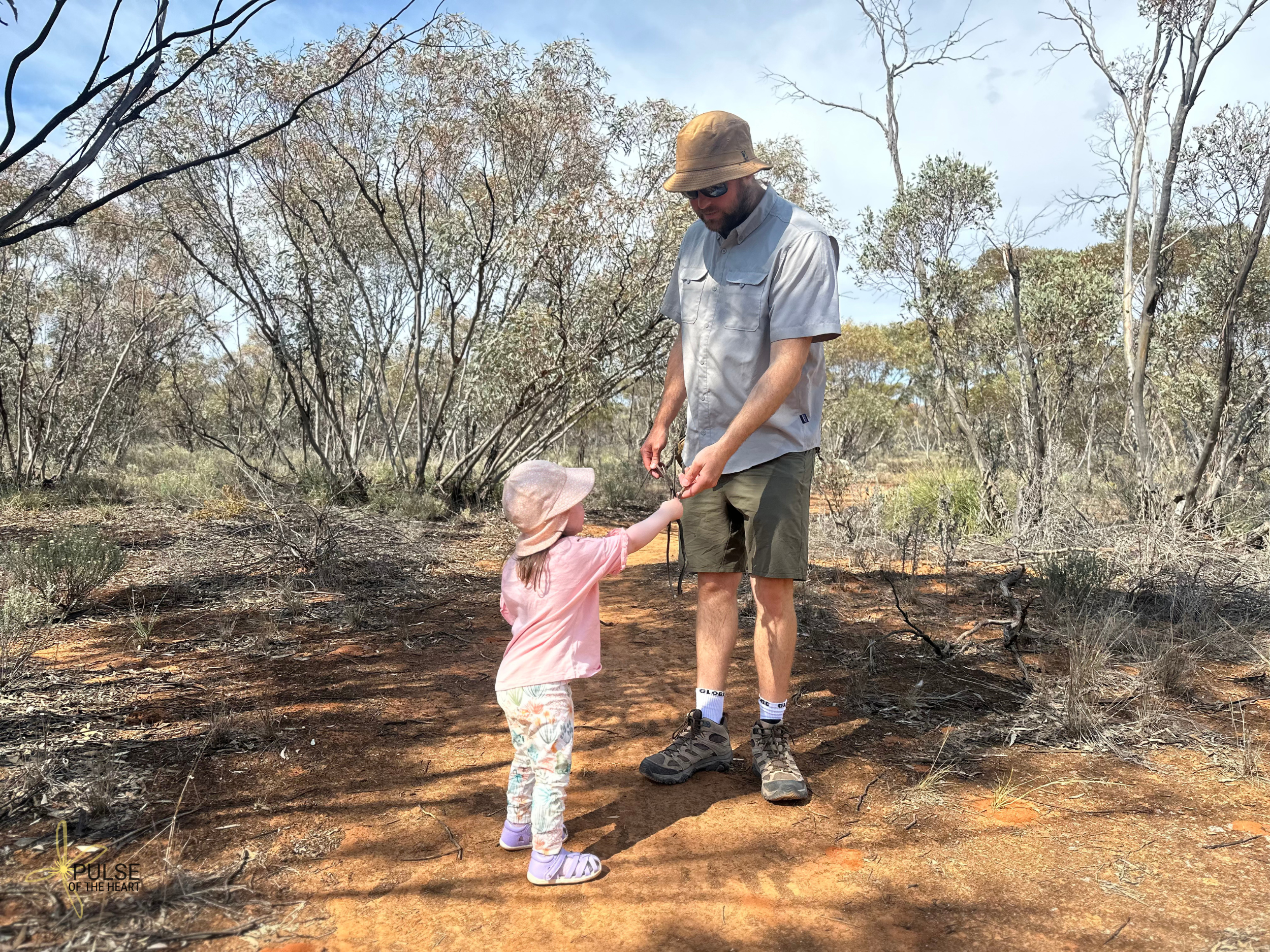
We enjoyed our stay at Main Camp. The compostable toilets were clean and well-maintained. The campground is surrounded by beautiful grass land, with lots of bird life and kangaroos to watch. The sites are spacious, with gravel paths to access the toilet block.
Some sites have walk-through access to the toilet blocks. With a young child, we try to avoid sites where someone else will need to walk through if possible.
How to get to Mungo National Park
We drove from Mildura to Mungo National Park. From Mildura, Cross the bridge to Buronga and follow the Silver City Highway towards Broken Hill. As you leave Buronga you'll see Arumpo Road with a sign indicating Mungo National Park, follow this road to its end.
We stopped at the dirt to let down tire pressures. There’s no pull in, but the road is wide with plenty of room for other cars to pass. 4WD recommended, the road was in pretty poor condition.
Now in August 2025, there’s an alert for the poor condition of roads into Mungo National Park. It’s always worth checking before you travel. Currently, parts of the Mungo Track are also closed due to road damage from recent rains and because new archeological artefacts have been revealed.
Check for updates on park closures and restrictions on the NPWS website here.
Your Mungo National Park adventure awaits
Mungo is a spectacular location and it requires some effort to fully appreciate it. Join the tour, explore the visitor information centre and make time to take in the sunsets and sunrises. Enjoy the peaceful camp and space for quality family time.
If you’re looking for more travel inspiration or tips for travelling with a little kid, check out some of my other posts!


We acknowledge over 65,000 years of continuous care and custodianship of the Paakantji, Mutthi Mutthi and Ngiyampaa people over these lands and waters. Their sovereignty has never been ceded. We pay respect to Elders past and present, and the Paakantji, Mutthi Mutthi and Ngiyampaa people as the traditional and rightful owners of this Country.